

Rise above the limits of wasteful code
Every line of code
is a choice.
Somebody chose what work the machine would do. Almost nobody looked at that choice again. Ascend is the company that looks, so that software uses only the resources it truly needs and no company is held back by its own code.
Invisible cost
“How can you not see it?
It’s there.”
Broken code announces itself. A test fails, a page errors, someone gets pinged at two in the morning. Wasteful code does none of that. It passes review, ships on a Friday, and then quietly does four times the work its result requires. On every request. For years.
Most people never spot it, because it breaks nothing. It only costs. Latency in the services carrying real traffic. Capacity you already paid for. A cloud bill that climbs no matter how carefully you negotiate it.

The same small gap lives in millions of repositories. Multiply it and it stops being an invoice. Our digital infrastructure already draws power on the scale of an entire country, and we are only at the beginning.
No brakes
“AI writes code faster
than Earth can
power it. Now we’re
sending data centers
into space.”
AI did not create this problem. It removed the last thing holding it back, which was how fast a human being can type.
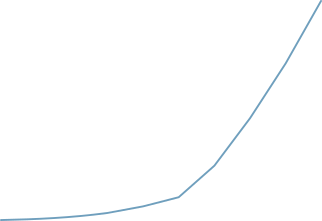
Data centers are on track to use 945 TWh of electricity a year by 2030, more than Japan uses today. SpaceX has already designed a satellite to run AI compute in space. Before we launch the waste into space, someone should look at the code.











Our answer
“We train models to be an optimization expert.”
Not a general-purpose model that knows a little about everything. Small models, fine-tuned on a single task of recognizing work a machine never needed to do.

Reads flows, not files
The same operation can be necessary on one path and free work on another. Only the whole flow tells you which.

Ranks by what it costs
By what the work costs where it actually runs, not by how alarming it looks in a file.

Clears what nobody had time for
Technical debt was never a mystery, only a queue no quarter had room for. That is the part AI changed.

Writes the fix
Proves behavior holds, hands you the diff and the reasoning, and waits.

Never sends your code anywhere
It runs on your machines. Nothing leaves, nothing is metered.
Our mission
“To eliminate technological
boundaries, and help companies
maximize their potential.”

Dan Gross
Co-founder and CEO
Co-founded Navajo Systems and led it to Salesforce in 2011, the first Israeli company Salesforce ever bought.
Spent the twenty years since on the commercial side of enterprise software, at Salesforce as VP and at Mend.io as EVP of business development.
Believes the companies that stay ahead will treat efficiency as built in by design, not cleaned up later.

Inon Henig
Co-founder and CTO
Twenty-five years in performance engineering at NICE, Optimove and NSO, and the reason any of this exists.
Collects mechanical watches and talks about software the same way: a device that keeps time with nothing but gears and springs, where every part earns its place or it is not in the movement.
Still believes the most expensive bug is the one that passes every test.
The team
Performance engineers, model researchers and infrastructure engineers, all hired to see something most of the industry walks past.
⌖ Tel Aviv Contact us →

Beyond cost
“A developer who writes efficient code is a guardian of the planet. Nobody has told them that yet.”

Four things we believe.
01
Correct is not efficient.
Passing every test says nothing about what the code costs to run.
02
Evidence over adjectives.
A named waste pattern and a before-and-after number beats any claim to be revolutionary.
03
Nobody gives anything up.
The same code, doing the same job, on a fraction of the resources. For once, the right thing commercially and the right thing for the world are the same thing.
04
The demand was never a given.
When compute runs short, the world makes more compute. We think the better question is how much of it was needed.
Point it at a repository you
believe is clean.
That is usually the interesting one.