



Rise above the limits of wasteful code
Your AI writes beautiful code.It’s setting money on fire.
Ascend finds the compute your code never needed, human-written or AI-generated. It writes the fix, proves behavior holds, and ships it. Small models built for one job, running inside your network. You approve what changes.
Why the waste compounds
AI was built for speed, and it learned from billions of lines of already-wasteful code. Now it writes most of your codebase and ships faster than anyone can review. The waste compounds every quarter while compute prices climb.

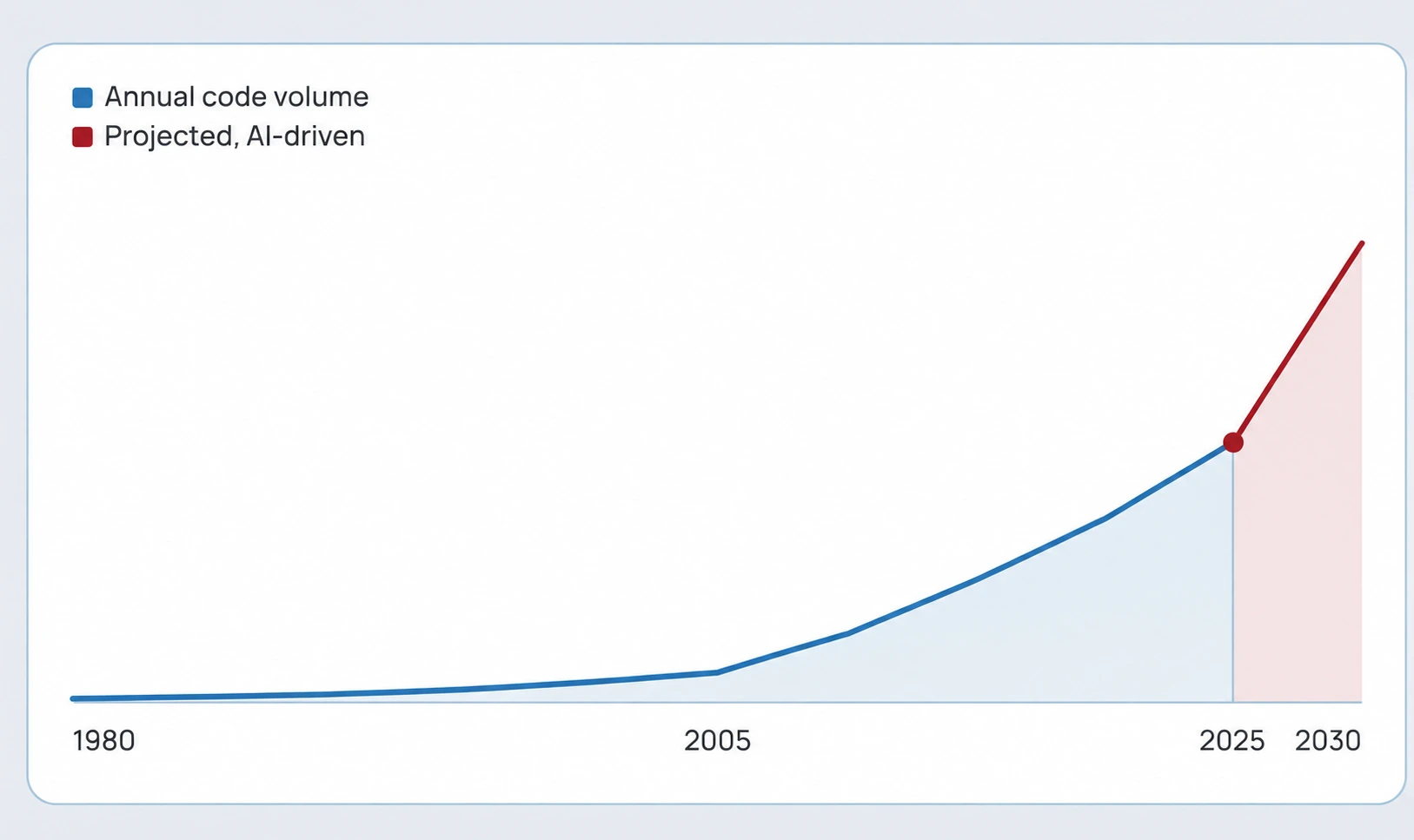

30%
Where every tool
works today
Rightsizing, commitments, scheduling, rate negotiation. The whole cloud cost industry lives in this slice.

70%
Where the
savings are
Compute your code demands and never needed, sitting on every invoice you’ve ever paid. We take it back.
No solution could do this.
So we built one.
Our small language models do one thing: find and fix computational waste. Trained on 100+ waste patterns and 25 years of production performance engineering.

Trained
on waste
Built by engineers who spent 25 years tuning production systems. Every pattern it knows came from real work.
Reads the
whole system
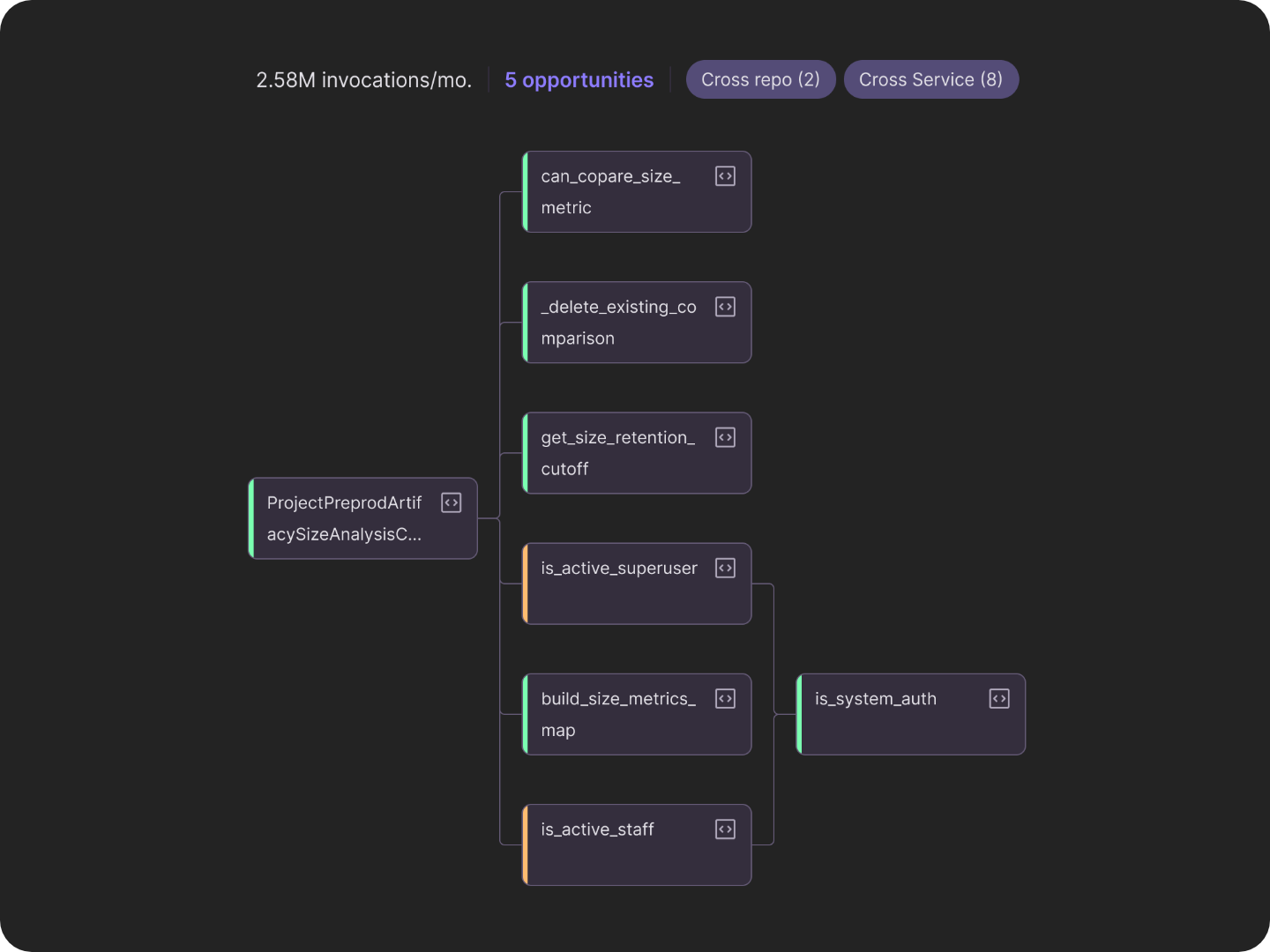
Execution paths across services and repos, where the same function is free on one path and costly on another.
BYOC
ready
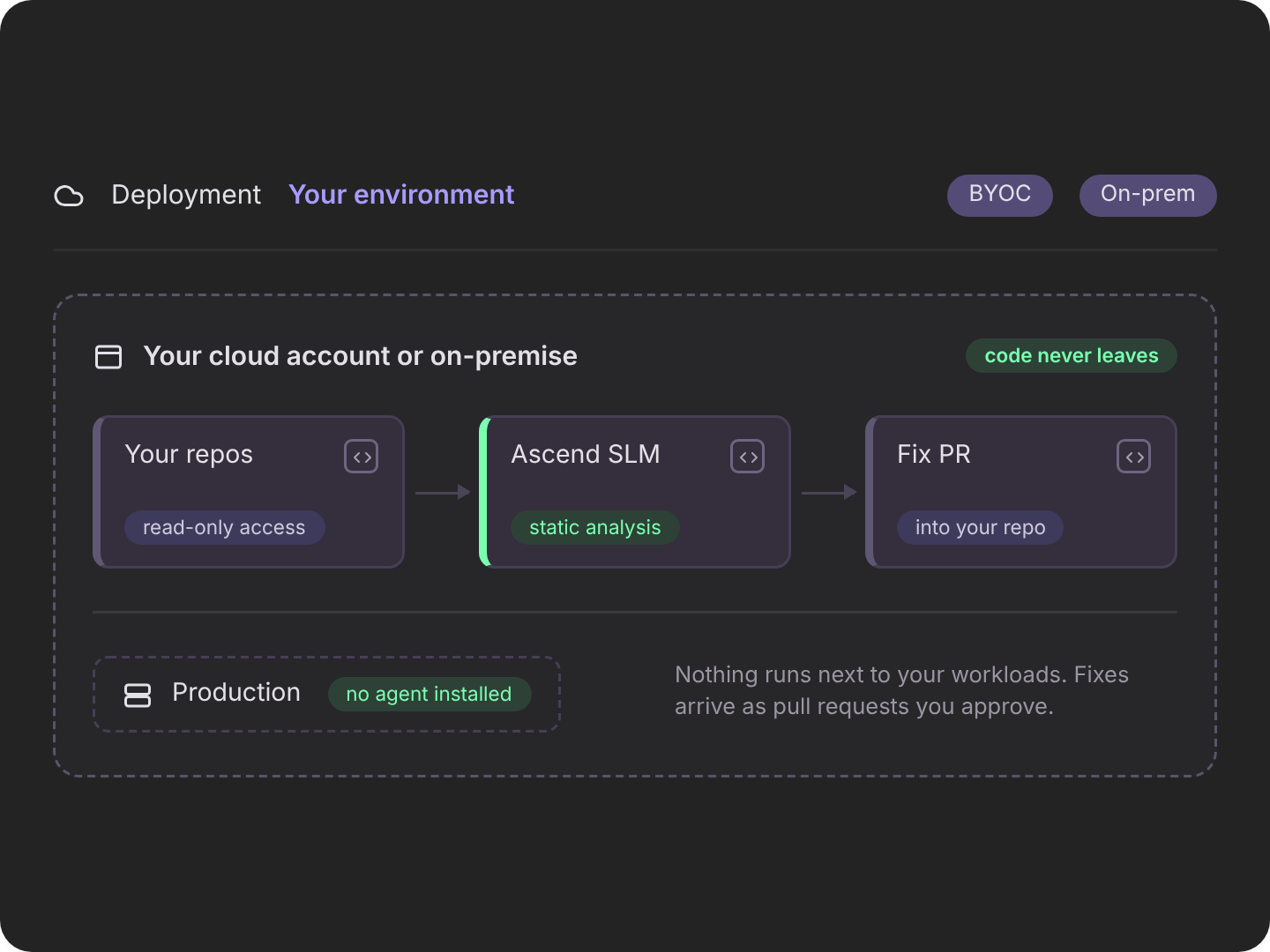
Your own cloud account or on-premise. Static analysis only, no agent in production.
We don’t report.
We fix.
Not a dashboard. Not a rightsizer. Not a diff-by-diff optimizer. We read the whole system, fix the waste in the logic, and prove it holds.
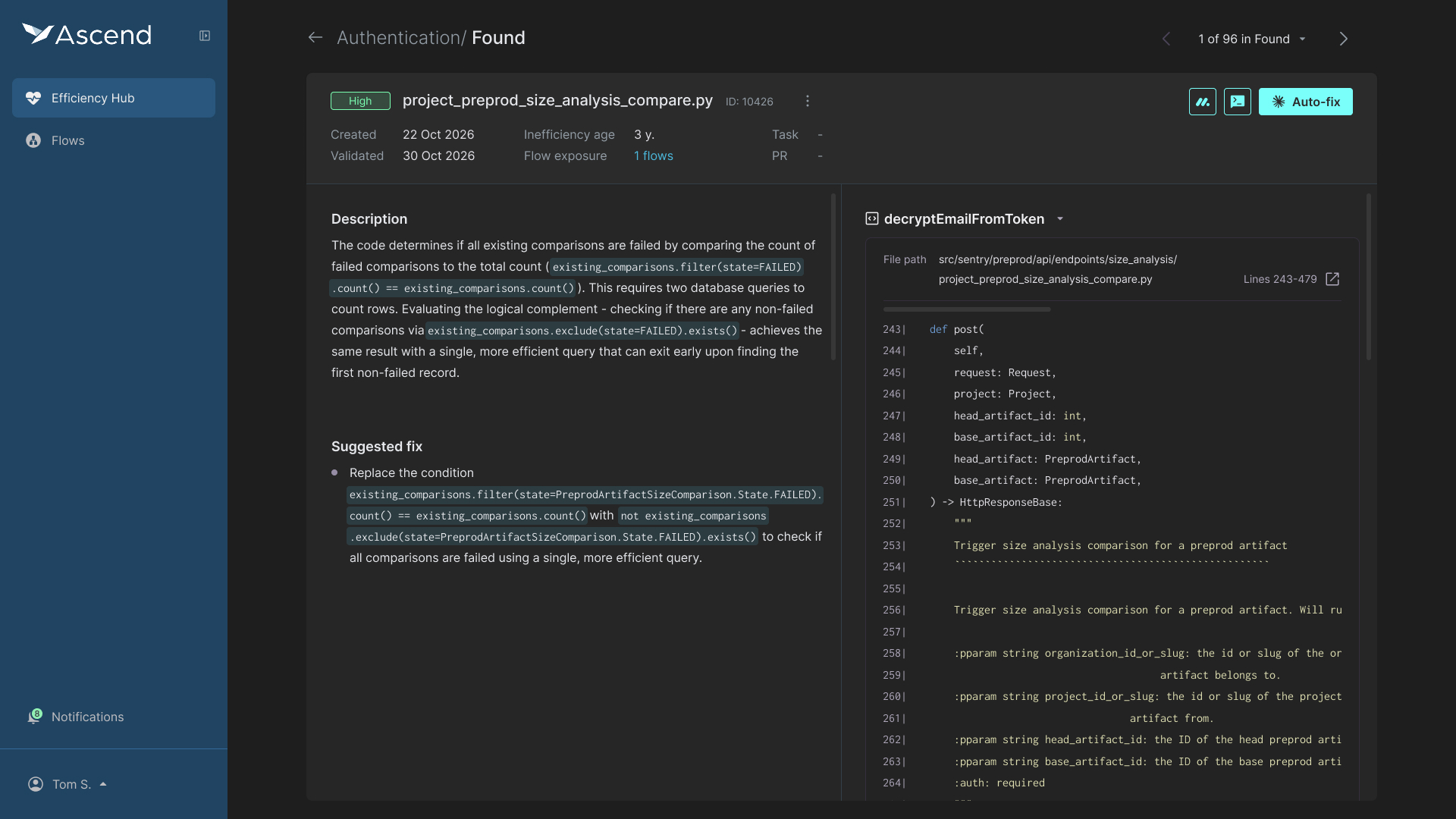
See the whole system
Structure, dependencies and execution paths across services. Where a function is cheap on one path and costly on another.
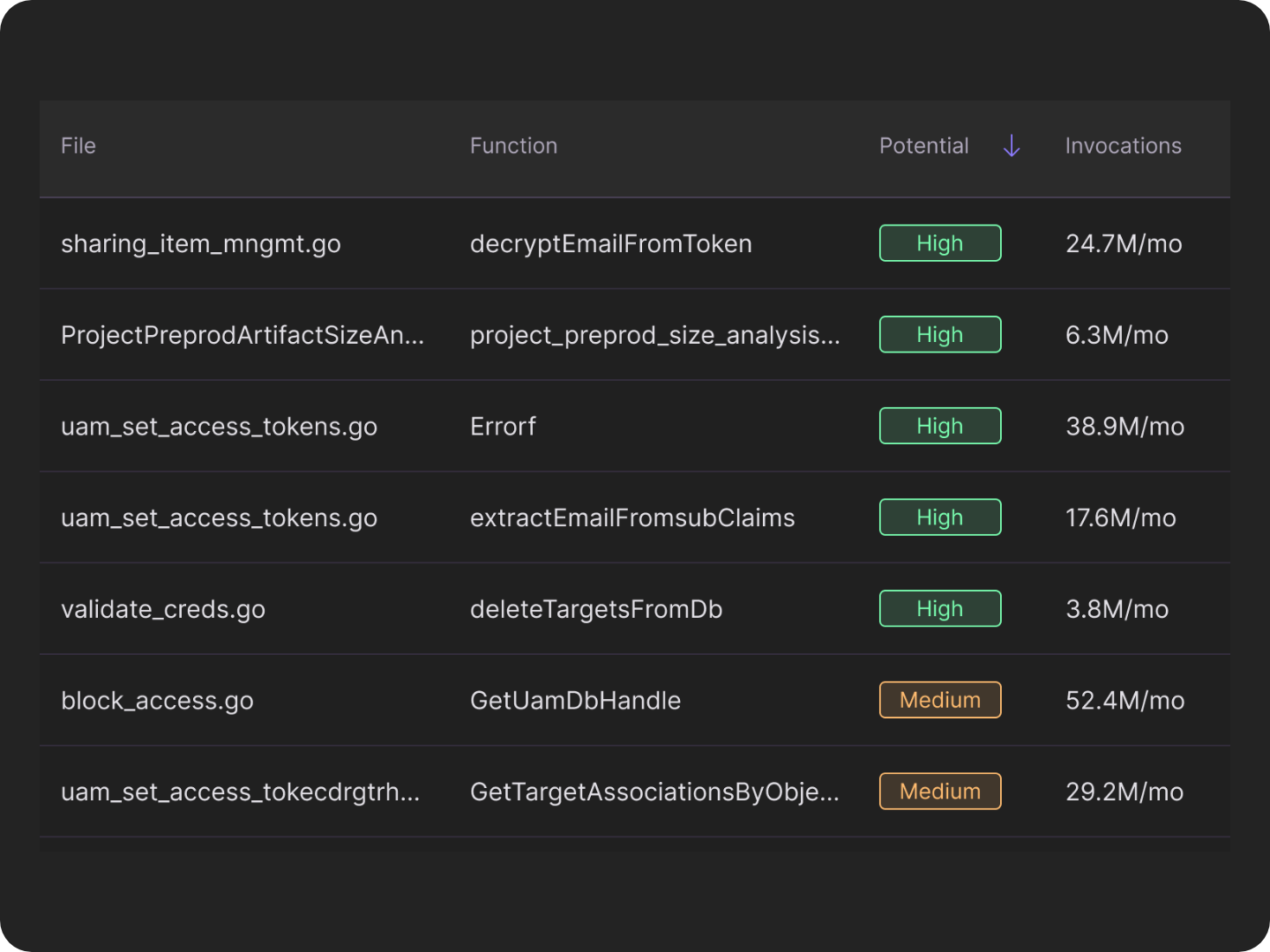
Find the waste
The redundant loop. The query is sitting inside the iteration. Ranked by production impact.
Fix it, your call
We write the fix and verify behavior holds. Ship on approval, or let it run on paths you’ve cleared. You always get the diff and the reasoning.
Keep it clean
Every new PR, AI-generated included, runs the same check. Gains hold between cleanups.

Less compute. More room to build.

Compute spend drops, no new infrastructure
Recover the capacity wasteful code eats, instead of buying more to cover it.

AI code is checked before it merges
An efficiency gate on every pull request, where waste is cheapest to fix.
Production gets faster
Lower execution time and latency on the services handling real traffic. No re-architecture.

No more hunting waste by hand
Continuous detection replaces profiling sessions and the sprint booked after someone spots the bill.

Fixes are verified, not assumed
Every change is checked against real behavior and arrives with the diff and the reasoning.

Capacity you already own, returned
Scale without scaling spend. The gain compounds as AI writes more of your code.
Same workload.
Less work.
A live AWS EC2 production server, before and after. The workload didn’t change. The work it took to serve it did.
After remediation
Before
Memory
About 55% lower

Started remediation
Memory
About 55% lower
Started remediation
Before
After remediation
After remediation
Before

Started remediation
CPU time
About 85% lower


The spec sheet.
No adjectives.

Autonomous detection, repair on your approval

Code layer, not infrastructure

Continuous, not quarterly

Purpose-built efficiency models

Zero egress, zero token cost

APM-validated impact

Native to repos and CI/CD

Whole-codebase, not diff-level
Three seats. Three reasons.

CTO / VP R&D
Wasted compute becomes recovered capacity. No new infrastructure line item.

Head of AI Development
Keep shipping at AI speed, with an efficiency gate on every PR.

Head of FinOps
The next lever, at the code layer your current tools were never built to reach.




One repo. See for yourself.
Point Ascend at one repo. It returns the waste, named and ranked by what each fix saves.